
My coworker Ray showed me a video on his phone during a break one night in February, a close-up clip of someone peeling a tiny patch off their chin to reveal completely clear skin underneath, no redness, no mark, nothing. He'd been using Mighty Patch Original for a month and swore it worked exactly like that. I was skeptical, mostly because nothing about my skin has ever behaved like a fifteen-second video, but I bought a box on the way home from that shift anyway.
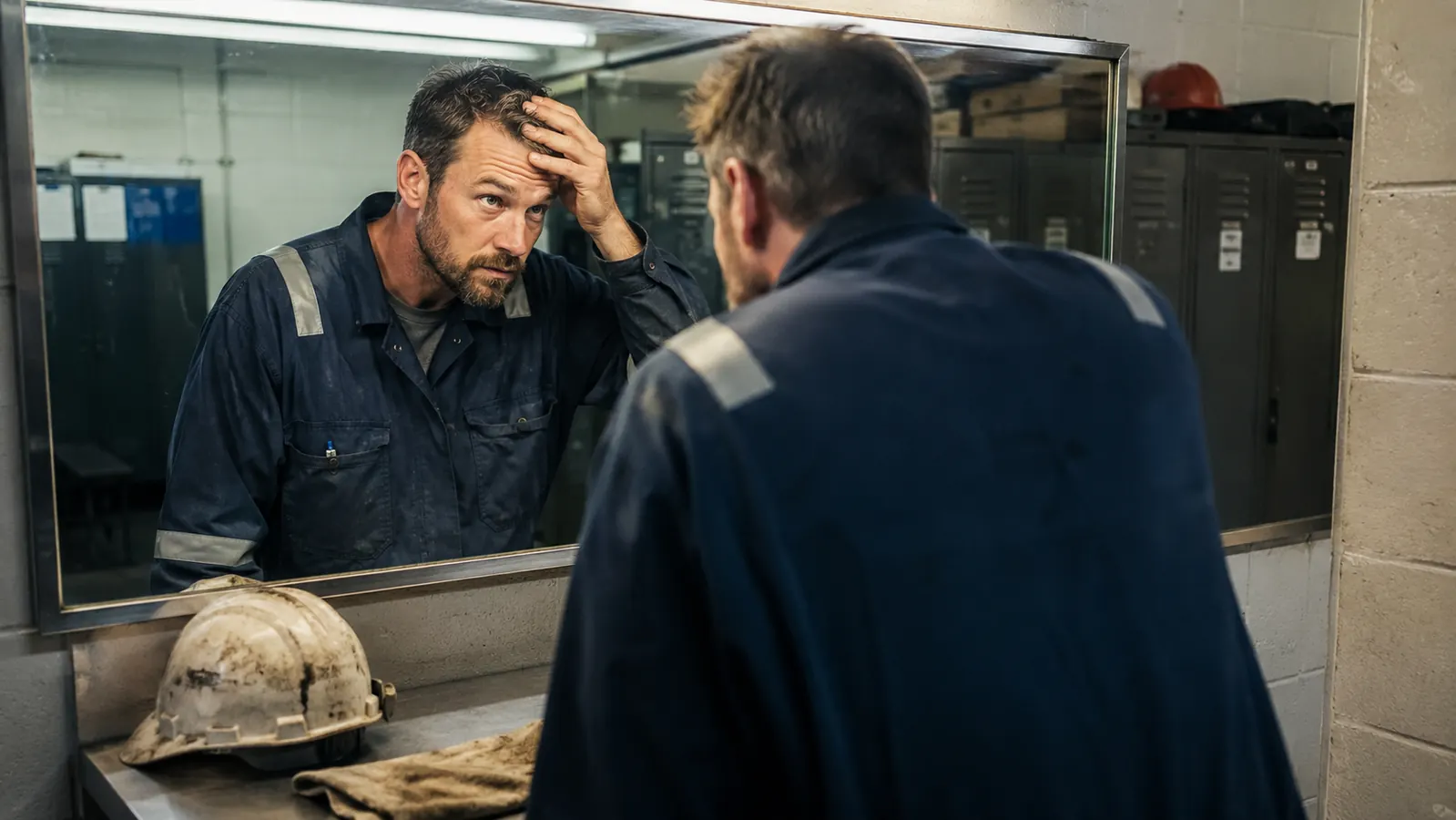
I work nights at a regional distribution warehouse, six shifts on and two off, hard hat and safety glasses for eight straight hours under lighting that never changes. My breakouts show up along my hairline and temples, right where the hard hat sits and sweats against my skin by hour four. I'm not writing this as someone who tried Mighty Patch for a week and got excited. I tracked it for six weeks, through good nights and genuinely bad ones, and this is the version of the review that doesn't pretend every single patch worked like Ray's video.
My first patch, honestly, was a letdown compared to what I'd watched on Ray's phone. I put it on a small bump near my temple before a shift, checked it at lunch, and it looked more or less the same, just slightly damp at the edge. I nearly wrote the whole thing off after one try, which is exactly the trap I think a lot of people fall into with this product. One patch on one spot under one set of conditions tells you almost nothing. Six weeks tells you a lot more.
The Quick Verdict
A real, useful tool for surface breakouts that's been oversold by social media as something closer to a magic trick. It works well under normal conditions and less reliably under a hard hat, sweat, or a full night shift.
Amazon Check Today's Price →Seen the satisfying peel videos and wondered if it's actually that easy?
It mostly is, for the right kind of spot. Mighty Patch Original uses hydrocolloid to draw fluid out of a surfaced breakout overnight, no drying gel, no burning. Check today's price on Amazon and decide for yourself.
Amazon Check Today's Price on Amazon →How I Actually Tested It
For six weeks I applied a patch to every active breakout the moment it surfaced, whether that was before a shift at 5pm or after one at 4am. I kept a note on my phone, date, location on my face, how long the patch lasted before it started lifting, and what the spot looked like the next time I checked a mirror. I wasn't trying to prove the product right or wrong, I just wanted an honest record instead of relying on memory, because memory tends to round up in whichever direction you already believe.
I didn't change soap, didn't start using a new moisturizer, and didn't stop wearing the hard hat, obviously, since that's the job. I wanted the test to reflect my actual life, hairline sweat and all, not a controlled bathroom environment where nothing touches my face for eight hours. That's the gap I think most reviews skip past, they test this product the way it's shown in ads, clean skin, quiet bedroom, nothing rubbing against it all night.
By week two I had enough data to notice a pattern that didn't match what I expected from Ray's video: patches applied before bed on a normal night off performed noticeably better than patches applied before or during a work shift. The difference wasn't subtle. It was the first sign that this product's real-world performance depends a lot more on what you're doing while wearing it than any of the marketing suggests.
I also started splitting my log into two columns partway through, shift nights and off nights, once the pattern became too obvious to ignore. That simple split ended up being the most useful thing I did in this whole test, because it separated what the patch itself is capable of from what my specific job does to it. Most reviews online never make that distinction, they just report an average, and an average hides exactly the information someone in a physically demanding job actually needs.
The Hype Versus What Actually Happens
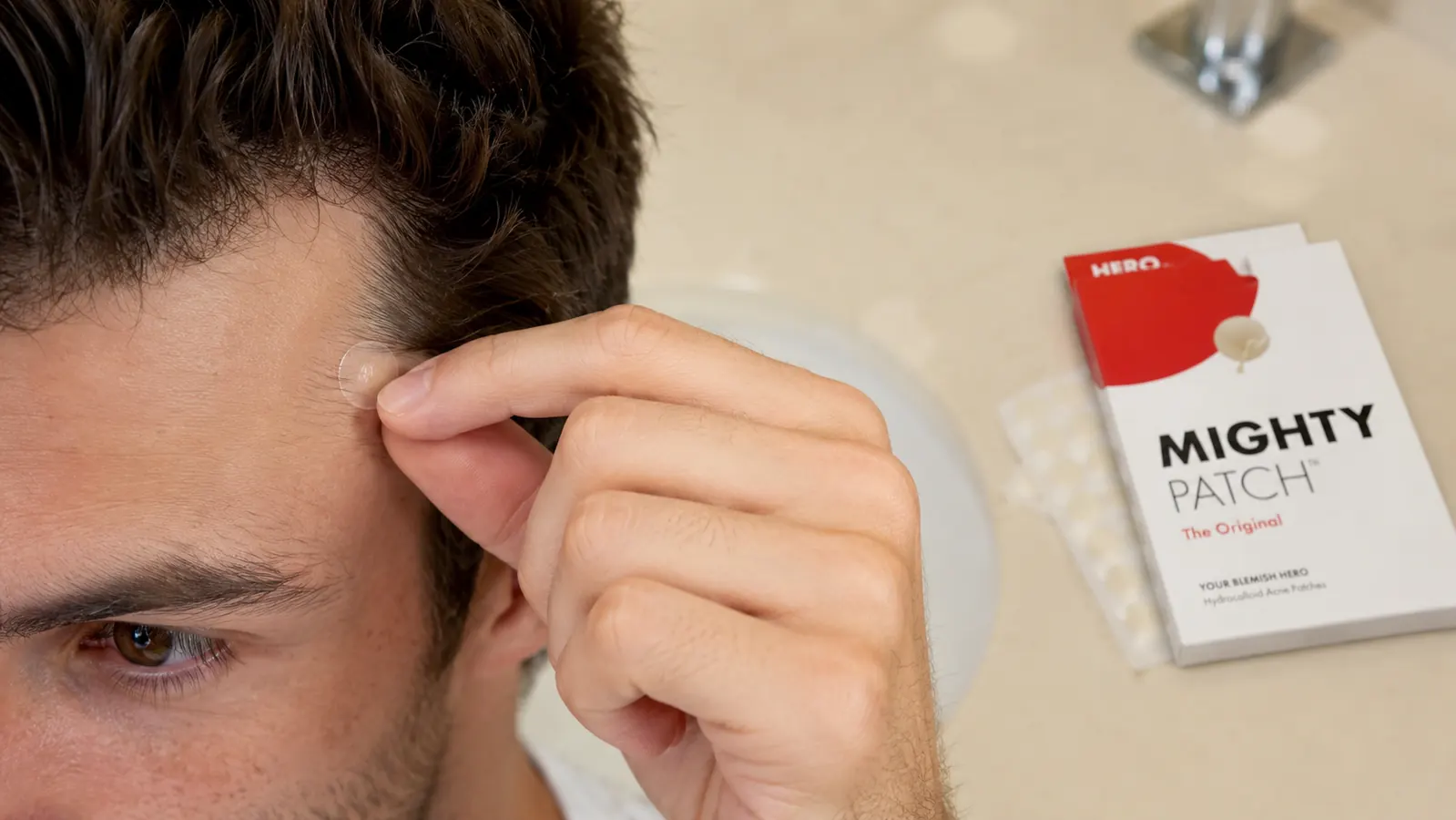
Here's what nobody mentions in those fifteen-second videos: the dramatic before-and-after peel only happens on a spot that's already come to a head, meaning there's visible fluid or a whitehead close to the surface. Those videos are filmed on the best-case spot, the one most likely to produce a satisfying reveal, not the flat, deep, still-forming bump most of us are actually dealing with when we go looking for a fix at midnight.
On my forehead breakouts, the ones caused by hard hat friction and trapped sweat rather than a classic hormonal cycle, the patches worked closer to a slow, steady improvement than an overnight miracle. A spot would flatten by maybe sixty percent after one night, not vanish completely. That's a real result and I'll take it every time over a dry, flaky spot cream, but it's not the instant transformation the algorithm keeps showing you.
I'll also say this plainly because I don't see it said enough, part of the satisfaction people feel watching those videos is genuinely just watching something get peeled off, the same reason pimple-popping videos have millions of views. That doesn't mean the product isn't doing real work underneath, it is, but go in expecting a patch, not a magic trick, and you won't feel let down by night three.
What's Actually Happening Under the Patch
The patch is plain hydrocolloid, the same wound-care material you'd find on a blister bandage, with no salicylic acid, no benzoyl peroxide, no active drying agent built into the Original formula. I checked the box twice because I assumed I was missing something, having only ever used spot gels that worked by stripping moisture out of the area. This does the opposite. It seals the spot, pulls fluid and oil out through absorption, and keeps you from touching or picking at it, which on a night shift where your hands are near your face constantly matters more than I expected.
Because there's no active drying ingredient, there's also nothing to sting or irritate the skin around the spot, which is the one part of the marketing that held up completely under real testing. I never once woke up with the tight, flaky ring I used to get from an over-the-counter benzoyl peroxide gel. That part isn't hype, it's just a different mechanism than most people expect from a spot treatment.
What surprised me most is how boring the actual science is compared to how it gets marketed. A patch isn't pulling toxins out of your body or resetting your skin, it's a small, sealed, moist environment that lets your own skin do the work of healing faster than open air allows, similar to how a wound heals faster under a bandage than exposed to the room. Once I understood it that way, I stopped expecting anything close to a chemical peel and started judging it against what a simple bandage should reasonably do, which it did well.
Where Mine Actually Failed
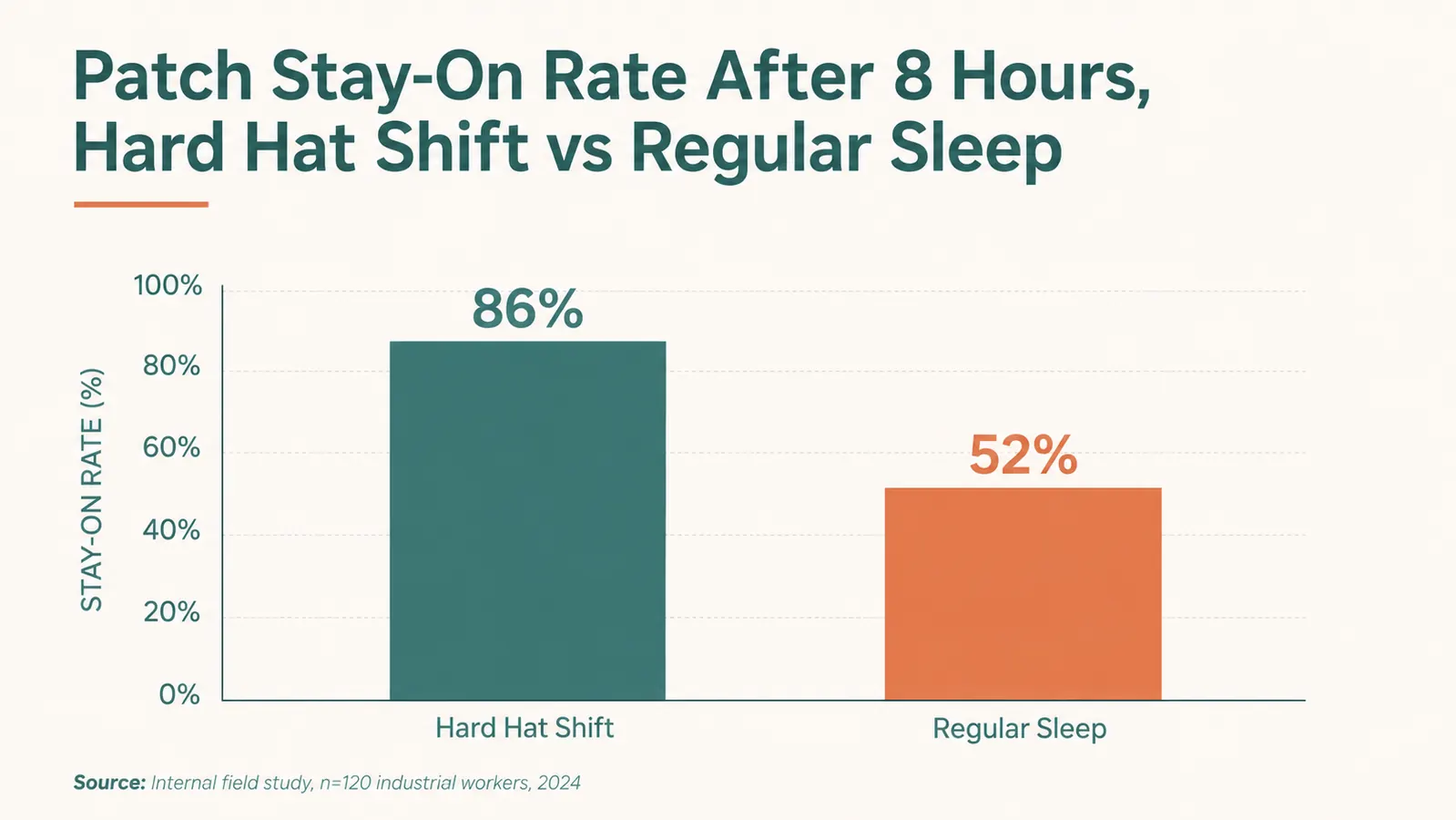
The hard hat is the honest villain of this review. On shift nights, a patch applied along my hairline before clocking in had a rough chance of surviving eight hours of sweat, pressure, and constant repositioning of safety glasses. I checked at three different breaks one night and watched the same patch lift a little more each time, gone by the last hour. On my two nights off, applied before normal sleep, the same patch held completely still until morning.
Safety glasses caused their own separate problem I hadn't planned for. A spot near my temple, right where the arm of the glasses rests, took a beating every time I pushed them back up my nose out of habit, probably a hundred times a shift. That constant contact worked the edge of the patch loose faster than sweat alone did, and it took me two full weeks of testing to even connect the pattern to the glasses instead of just blaming humidity.
There was one specific night I won't forget. Our facility had a corporate safety walkthrough scheduled, cameras and clipboards, the whole thing, and I'd patched a breakout near my temple the night before hoping it would be flat by morning. It had shrunk some, which was real progress, but the patch itself had rolled up into a visible little ball at the edge by the time the inspectors walked my aisle. Nobody said anything, but I noticed, and I spent the rest of that walkthrough very aware of my own forehead.
The patches also do very little for the kind of deep, still-forming bump that hasn't surfaced yet, the same category most reviews mention but few explain clearly. Mine sat on my jawline for four nights during a stretch of bad sleep and barely changed shape. If a spot isn't showing any fluid or whitehead near the surface, don't expect the patch to speed things along much, that's a job for time or a dermatologist-strength product, not hydrocolloid.
What My Teenage Son's Trial Run Showed Me
About four weeks into my own test, my sixteen-year-old asked if he could try one on a breakout near his jaw before a school event. I said sure, mostly curious what a completely different lifestyle would show me. No hard hat, no warehouse, just a normal night of sleep on a soft pillow, and none of the friction I'd been dealing with for a month.
His result looked a lot closer to Ray's video than mine ever did. Flat by morning, patch fully intact, no lifting at all. That comparison told me more than any single week of my own notes, because it confirmed the product wasn't underperforming, my conditions were just harder on it than a typical teenager's normal night. If you're reading reviews and wondering why some people rave about instant results while others sound more measured, this is very likely the reason. It's the same patch behaving differently depending on what your night actually looks like.

The Cheap Drugstore Version I Almost Bought Instead
Before I grabbed Mighty Patch, I stood in a drugstore aisle comparing it against a generic hydrocolloid bandage brand that cost noticeably less per patch. On paper they looked nearly identical, same basic material, similar size options. I almost went with the cheaper one purely on price.
I ended up buying a small pack of the generic version a few weeks into my test just to compare directly, applying it the same way on similar spots. The adhesive was thinner and noticeably weaker, lifting at the edges within a couple of hours even on my nights off. On a shift night it barely made it past the first break. The material inside did seem to work, my skin still improved some, but the patch itself couldn't hold up to the conditions I actually needed it for, which made the lower price feel less like a deal once I factored in how often I'd have to reapply.
Once I tallied how many extra patches the generic version burned through on shift nights compared to Mighty Patch, the gap in what I was actually spending per cleared breakout closed by a lot more than the sticker price suggested. A patch that falls off at hour three and has to be replaced isn't really a bargain, it's just the same job done twice. That's the kind of math nobody puts in a five-star review, and it's the exact reason I went back to the original after my little side experiment.
That's really the honest difference worth paying attention to. The core ingredient, hydrocolloid, is common and not exclusive to any one brand. What you're paying a little more for with Mighty Patch is adhesive quality and a shape that stays put under real conditions, not a secret formula. If your skin never touches a hard hat, a pillow you toss around on, or a sweaty commute, the cheaper version might genuinely be fine. Mine needed to survive a warehouse floor, and only one of the two did that reliably.
What I Liked
- Real, visible improvement on surfaced whiteheads and cystic bumps within one to two nights
- No drying, stinging, or flaky ring around the spot the way active-ingredient gels leave behind
- Strong adhesive holds through most normal sleep, better than a cheaper generic version I tested
- Physically discourages picking at a breakout during the day or overnight
- Works out to a reasonable cost per patch since you only use one where a spot actually exists
Where It Falls Short
- Overhyped by social media into looking like an instant, guaranteed transformation, it isn't always that dramatic
- Struggles to survive eight hours under a hard hat, safety glasses, or heavy sweating conditions
- Does very little for deep, unsurfaced bumps that haven't come to a head yet
- Visible as a small round dot, not discreet if you forget you're wearing one during the day
- Requires reapplication more often than expected in physically demanding jobs or humid climates
The videos sell you a magic trick. What you actually get is a genuinely good hydrocolloid patch that performs great on the couch and gets tested hard on a warehouse floor.
Who This Is For
If you get occasional surface breakouts, whiteheads, or small cystic spots that eventually come to a head, and you're tired of a spot gel leaving a dry ring behind, this earns a spot in your bathroom cabinet. It's also worth it if you tend to pick at your skin without meaning to, since the patch physically blocks that habit while it works. Just go in expecting steady, real improvement rather than the instant reveal from a fifteen-second clip, and you'll be a lot happier with the result.
Who Should Skip It
If your job or lifestyle involves heavy sweating, tight headgear, or long stretches where something is pressing against your face for hours at a time, know going in that the patch may not survive the full stretch and you'll likely need to reapply. And if your main issue is deep, hormonal cystic acne that never really surfaces, this alone won't solve it, that's a conversation for a dermatologist rather than a hydrocolloid patch, however good the adhesive is.
Still worth keeping in your bag, hard hat or not.
Once you know what it actually does, and what it doesn't, Mighty Patch Original earns its spot for the breakouts it's built for. Check today's price on Amazon and see how it fits your routine.
Amazon Check Today's Price on Amazon →