
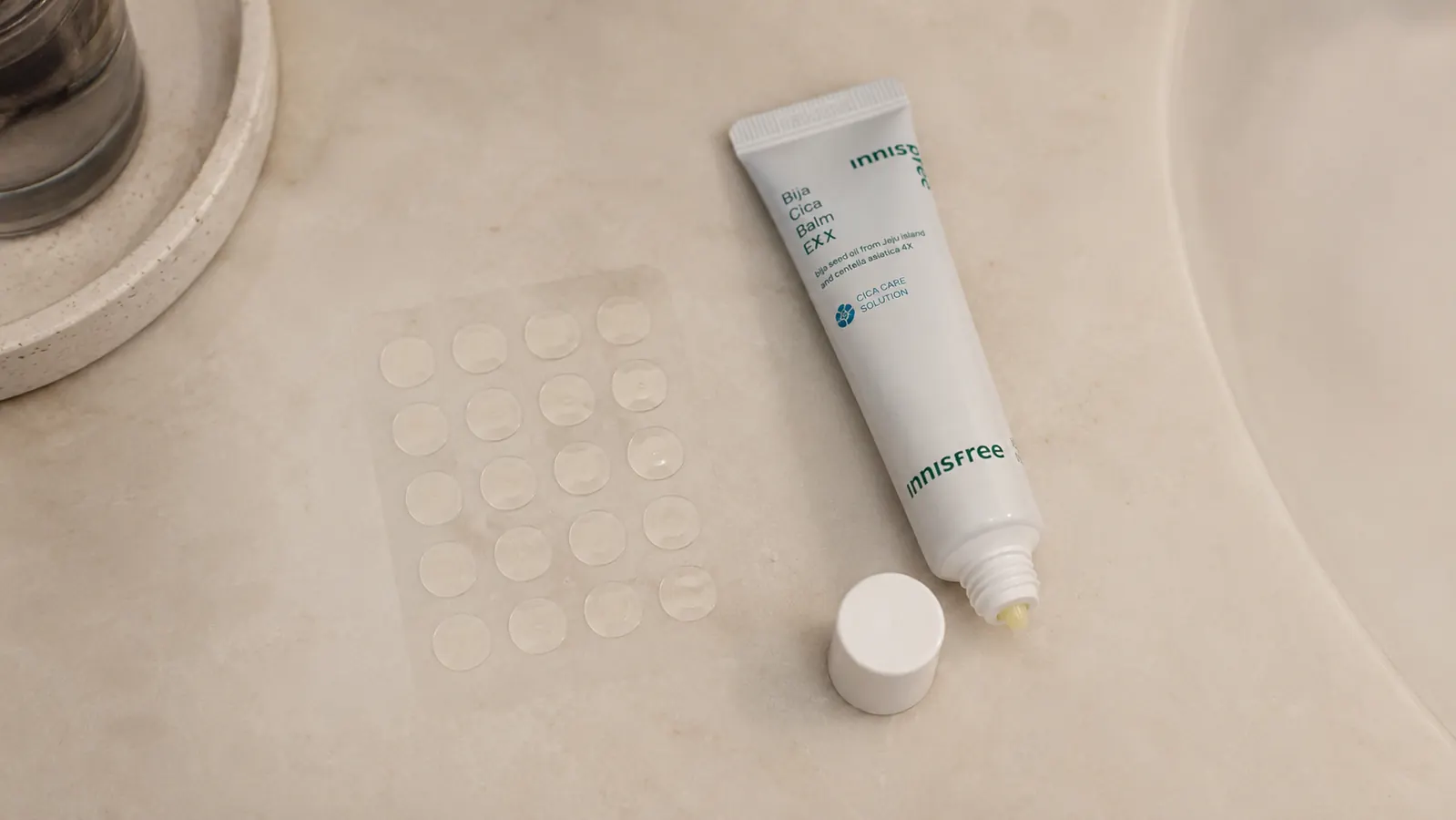
For years my answer to a breakout was the same tube of spot cream everyone seems to keep in a bathroom drawer. I'd dab a little benzoyl peroxide gel on whatever bump showed up, go to sleep, and wake up to a spot that was drier, flakier, and honestly not much smaller. I did that for over a decade before I ever tried a hydrocolloid patch, mostly because the packaging looked gimmicky and I assumed a sticky dot couldn't outperform an actual medicated cream.
I was wrong, and it didn't take long to notice. Once I started reaching for Mighty Patch Original instead of my usual gel, the difference between the two approaches became obvious within the first week. These are the ten reasons a hydrocolloid patch beats a spot cream for an overnight breakout, based on switching between both for months, not a single side-by-side test.
Still reaching for a cream that leaves you flaky by morning?
A hydrocolloid patch pulls fluid out of a breakout overnight instead of just drying the surface. See today's price on the patch that changed my routine.
Amazon Check Today's Price on Amazon →It pulls fluid out instead of drying the surface
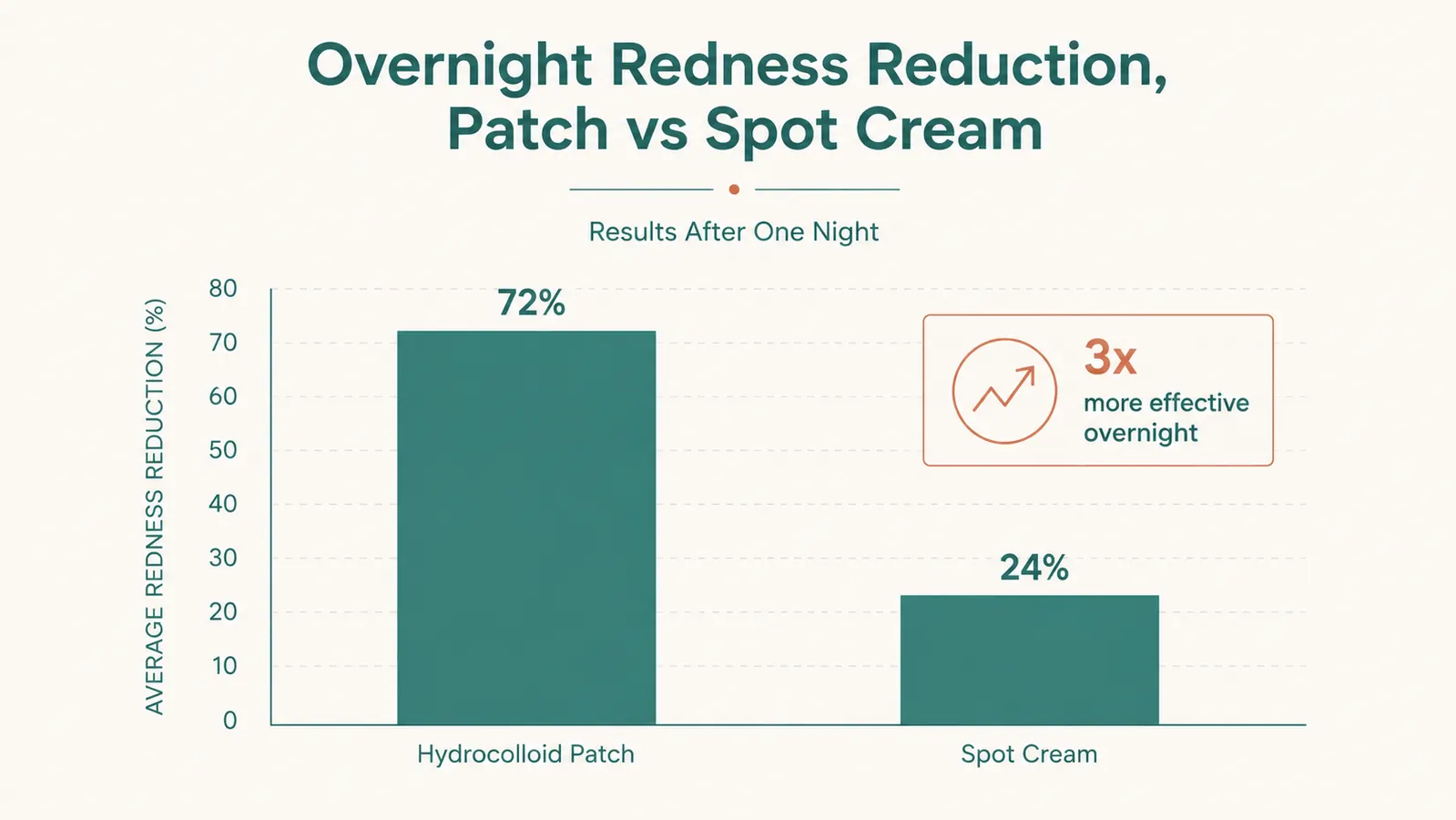
Spot cream works by drying out the top layer of skin over a bump, which can shrink it a little but also leaves the surrounding area tight and flaky. A hydrocolloid patch does something different. It draws fluid, oil, and gunk up and out of the spot itself, absorbing it into the patch material rather than just evaporating moisture off the surface. That's a big part of why a whitehead under a patch looks visibly flatter by morning instead of just drier.
No flaky red ring the next morning
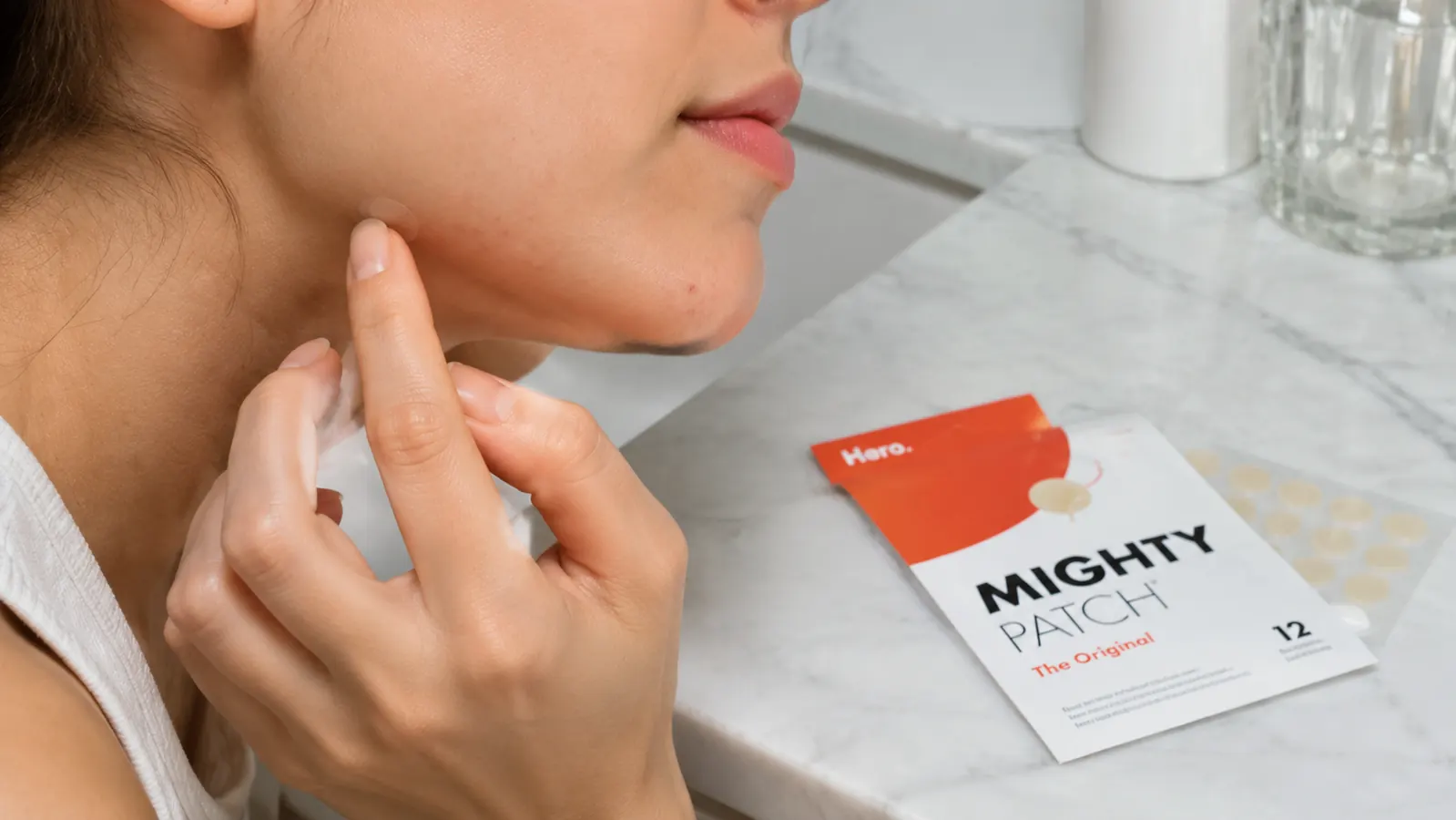
Every spot cream I've used left a small halo of irritated, peeling skin around the actual bump, which usually stuck around longer than the breakout itself. A patch seals the spot away from air instead of exposing it to a drying active ingredient, so the skin around it stays calm. I stopped waking up to a bump plus a second problem ringed around it once I made the switch.
It physically stops you from picking at night
This one mattered more than I expected. With a cream, there's nothing stopping your hand from wandering over to a spot in your sleep or during a stressful moment the next day. A patch sits on top of the bump like a small shield, so there's nothing to pick at even if the habit is still there. Fewer picked spots meant noticeably fewer dark marks left behind once the breakout cleared.
It creates a barrier against your pillowcase
Spot cream sits exposed on your skin all night, which means it's transferring onto your pillowcase and your pillowcase is transferring right back, oils, bacteria, whatever else collected there since the last wash. A patch forms a sealed barrier over the spot, so it isn't sitting in direct contact with fabric all night the way a bare, creamed-up bump is. Less back-and-forth contact seems to matter more than I gave it credit for.
No stinging on skin that's already irritated
Benzoyl peroxide and salicylic acid spot creams can genuinely sting on a bump that's already inflamed, especially if the skin around it is sensitive or already a little broken down. Mighty Patch Original has no active drying ingredient at all, just medical-grade hydrocolloid, so there's nothing to burn or sting going on. That made it the obvious choice for a spot that was already angry and swollen, not just a cosmetic one.
It works while you sleep, no waiting for it to dry
Spot cream needs a few minutes to dry down before you can lie on that side of your face without smearing it everywhere, which sounds minor until you're trying to fall asleep on time. A patch is dry and set the moment you press it on. There's no waiting around, no accidentally wiping half of it onto your pillow before it's had time to absorb.
It's thin enough to wear under makeup the next day
If a spot is still working itself out by morning, a smear of leftover cream residue under foundation never looks clean, it tends to pill or shine through. A hydrocolloid patch is thin and matte enough that a fresh one can be worn under makeup for a few daytime hours in a pinch, especially the smaller sizes, without the obvious shine a cream leaves behind.

One patch means no wasted product on healthy skin
It's easy to swipe way more cream than a single spot actually needs, covering healthy skin around the bump in the process, which is part of what causes that dry halo in the first place. A patch only covers exactly the area you place it on. There's no excess product drying out skin that didn't need treating to begin with, which keeps the rest of your face out of it entirely.
Different sizes actually match different spots
A dab of cream is roughly the same blob no matter what you're treating, whether it's a tiny surfacing whitehead or a wider inflamed area. Mighty Patch Original comes in a range of patch sizes on one sheet, so a small spot gets a small patch and a larger one gets more coverage, instead of either under-treating or overloading the area with more product than it needs.
Faster visible results mean less product-hopping
When a spot cream doesn't show real change overnight, the natural response is to layer on something else the next day, a toner, a second cream, maybe a scrub, and now your skin is dealing with three products instead of one. A patch that visibly flattens a surface spot by morning removes that urge entirely. I stopped mixing treatments once I had one that actually worked on its own, which was better for my skin than any of the combinations I used to try.
What I'd Skip
I'd skip any spot cream that leads with a strong tingling or burning sensation as proof it's working. That sensation is usually just irritation, not evidence of anything happening beneath the surface, and it tends to leave the skin around a spot worse off than the spot itself. I'd also skip using a patch, or a cream, on a deep bump that hasn't come to a head yet. Neither one does much for a flat, hormonal cyst still forming under the skin, and expecting an overnight fix there just leads to disappointment. And skip stacking a cream underneath a patch hoping for a faster result. The sealed environment a patch creates doesn't need an active ingredient trapped under it, and in my experience that combination just irritates skin that a plain patch would have calmed down on its own.
A cream tries to dry a spot out. A patch pulls what's actually causing it right out of your skin. Once I saw the difference in the mirror, I never went back to the tube.
Ready to retire the spot cream for good?
If you're tired of waking up to a flaky red ring around a bump that barely shrank, a hydrocolloid patch is worth having on hand for the next breakout. Check today's price on Amazon and see how it fits your routine.
Amazon Check Today's Price on Amazon →