

There's a very specific kind of dread that comes with catching a raised, red bump in the mirror and immediately doing the math on how many hours you have before you need to leave the house looking like a functioning adult. I've run that math more times than I'd like to admit, usually the morning of a client meeting or a dinner I'd been looking forward to for two weeks. Spot cream never worked fast enough for me. Pressing an ice cube against my jaw for ten minutes did basically nothing except give me a mild headache. What actually changed how I handle an overnight breakout was learning to use a hydrocolloid patch correctly, specifically Mighty Patch Original, instead of just sticking one on before bed and hoping for the best.
Here's the part most people skip past: a pimple patch isn't magic on its own. I burned through my first two boxes getting mediocre, inconsistent results because I was applying them wrong, at the wrong time, on skin that wasn't properly prepped. Once I fixed those things, the gap between a patch that barely does anything and one that actually flattens a bump by morning came down to technique, not luck and not the product itself. What follows is the exact five-step process I use now, in the order I actually do it, along with the specific mistakes that cost me a week of frustrated mornings before I figured out what I was doing wrong.
Woke Up to a Bump You Don't Have Time For?
Mighty Patch Original uses medical-grade hydrocolloid to pull fluid out of a surfaced breakout overnight, without the peeling or redness a spot cream leaves behind. Applied the right way, most people see a visibly flatter spot by morning.
Amazon Check Today's Price on Amazon →Step 1: Wash and Fully Dry the Area Before You Touch a Patch
Hydrocolloid adhesive needs a completely dry surface to bond properly, and this is the single most common mistake I see people make. Cleanse your face as you normally would at night, then pat the area dry with a clean towel and give it another minute or two of air-drying before you go anywhere near a patch. Skin that feels dry to the touch can still have a thin, invisible layer of moisture on it right after a shower, and that's enough to weaken the seal and shorten how long the patch actually stays put through the night.
The other mistake I made early on was applying a patch on top of toner, serum, or moisturizer residue. Any product left on the skin, even a thin layer, gets between the adhesive and your pores and cuts down on how well the patch grips. Now I treat the spot itself as the very last step of my nighttime routine. Everything else goes on first and gets a few minutes to soak in, and the patch goes on last, directly onto clean, bare, fully dry skin.
This matters even more if you wear makeup or sunscreen during the day, since both can leave a fine film behind that a regular cleanser doesn't always fully lift on the first pass. On days when I've worn a heavier foundation or a thicker mineral sunscreen, I go over the spot a second time with a cotton pad and a gentle micellar water before my usual wash, just to make sure nothing's left sitting on the skin. It's a small extra step, maybe thirty seconds, but I noticed a real difference in how long patches stayed sealed on those days versus the days I skipped it.
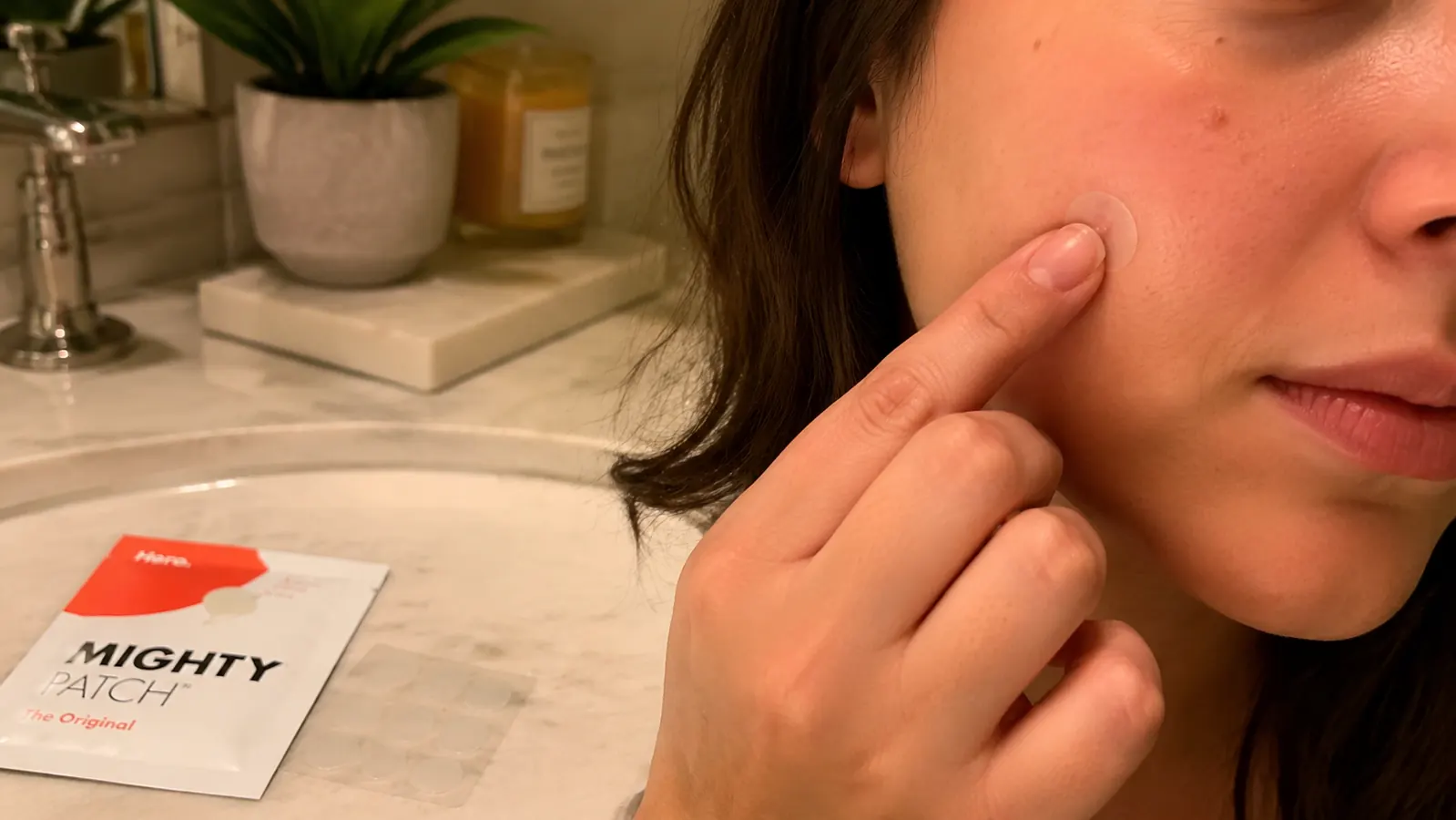
Step 2: Pick the Right Size Patch and Center It Exactly Over the Spot
Mighty Patch Original comes with a few different sizes on the sheet, and using one that's too small is a quiet way to waste the whole application. If the patch only covers the very tip of the bump and leaves the inflamed edge exposed, you're not getting the full sealed environment the hydrocolloid needs to actually pull fluid out. I size up whenever a spot looks even slightly bigger than the smallest patch on the sheet, since a patch that overlaps a little onto clear skin around the bump works better than one that barely fits.
Once you've picked the size, center it directly over the raised part of the spot and press down with a clean fingertip for a solid ten to fifteen seconds. The warmth and pressure from your finger actually helps activate the adhesive, and skipping this step is why some people find their patches peeling off within the first hour. I hold mine down while I brush my teeth or wash my hands, so it doesn't feel like extra time out of my routine, it's just built into something I'm already doing.
If the spot in question is one you've already picked at or popped, which I know isn't the ideal starting point but happens to almost everyone, center the patch over the open area rather than slightly off to one side. An open or broken spot is exactly the kind of thing hydrocolloid was originally designed for as a wound dressing, and getting full coverage over the raw area matters more here than on an unbroken bump. I've found these patches genuinely useful for calming down a spot I regret touching, not just for ones I left alone.
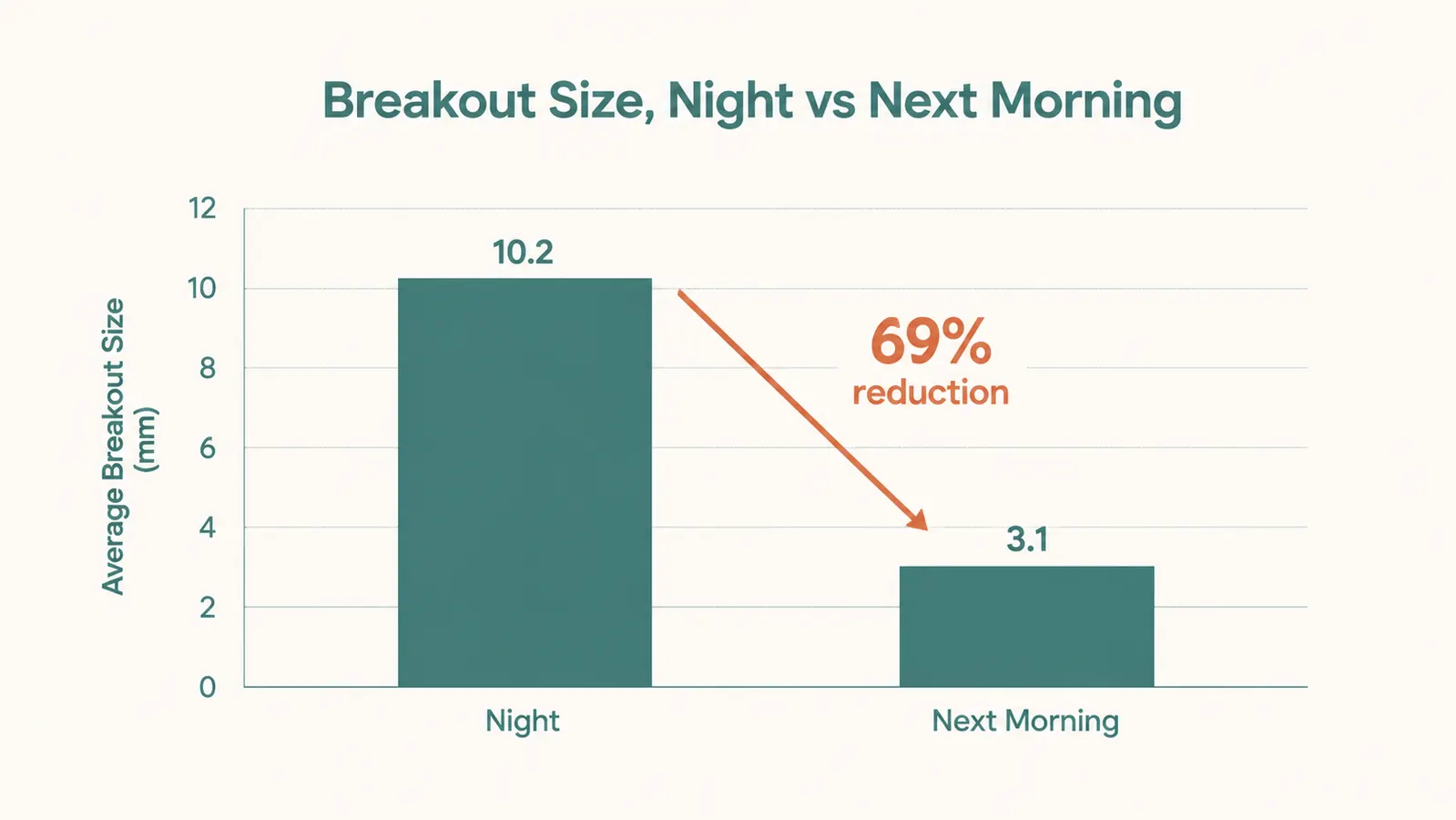
Step 3: Apply It as Early in the Evening as You Notice the Spot
Timing changes the results more than almost anything else on this list. A patch that's on for a full eight or nine hours overnight is going to pull out noticeably more fluid than one you slap on at midnight and peel off at seven. If I notice a spot forming in the late afternoon or early evening, the patch goes on right then, not after dinner, not right before I actually fall asleep. That extra stretch of hours is often the difference between waking up to a mostly flat mark and waking up to a bump that's only slightly smaller than it was the night before.
One thing that took me a while to understand is that the patch works best on a spot that's already surfaced, meaning there's visible fluid or a whitehead close to the top of the skin. On a deep, flat bump that hasn't come to a head yet, applying earlier won't magically make the patch reach something it can't get to. In that case, a patch left on overnight still helps calm inflammation and stops you from picking at it, but don't expect the same dramatic flattening you'd see on a spot that was already close to the surface.
I also learned not to double up on patches for the same spot at the same time, thinking two would work twice as fast. It doesn't work that way. A single patch, sized correctly and pressed down properly, does the job on its own, and stacking a second one on top mostly just wastes product and can trap extra moisture against skin that's already inflamed. If a spot is unusually large, sizing up to the next patch size on the sheet is the better move over layering two smaller ones.
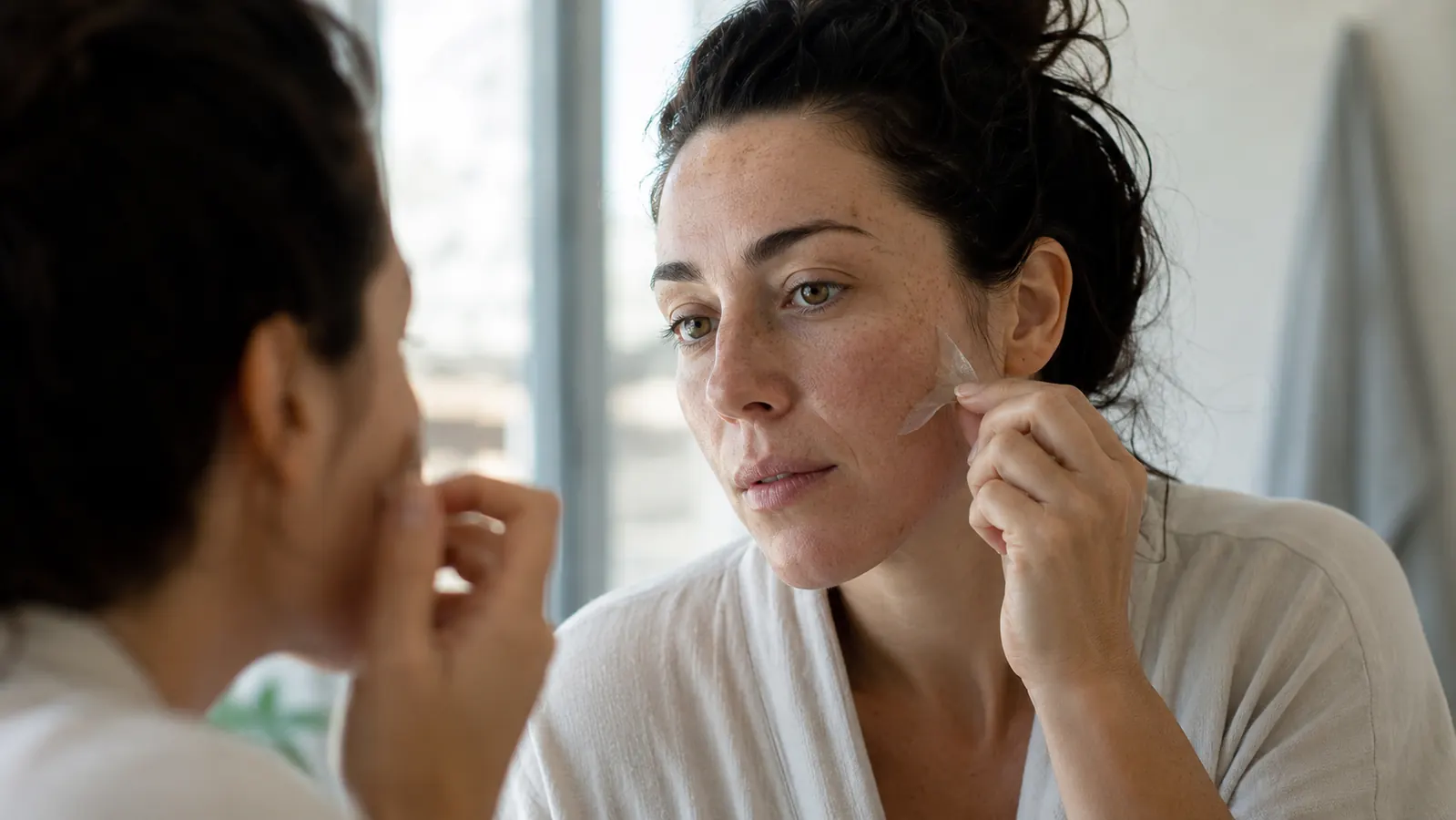
Step 4: Leave It Completely Alone Until Morning
This sounds obvious written down, but it's harder in practice than people expect. I used to check on a patch two or three times before bed, pressing on it, wondering if it was working, occasionally peeling up an edge just to look. Every time you lift an edge to peek, you break the seal that's doing the actual work, and you have to start the clock over. Once the patch is on and pressed down, the best thing you can do is genuinely forget about it until you wake up.
You'll usually notice the patch turn a cloudy white or slightly opaque color by morning, especially in the center over the spot. That change is the hydrocolloid doing its job, absorbing the fluid and oil that was sitting under the surface, and it's actually a good sign rather than something to worry about. If the patch is still mostly clear and hasn't changed at all, that usually just means the spot hadn't fully surfaced yet, which happens, and it doesn't mean the patch failed.
If you're a side sleeper and worry about a patch getting rubbed off against the pillow, I've found gently pressing the edges down one more time right before turning off the light helps a lot. Spots near the jawline or cheek, right where a pillow makes the most contact, are the ones most likely to lift overnight, so giving the edges that second press specifically on those areas is worth the extra few seconds before you actually fall asleep.
Step 5: Peel It Off Slowly, at an Angle, Not Straight Up
In the morning, peel the patch off slowly from one edge, pulling it sideways and down rather than straight up and off the skin. Pulling straight up puts more strain on the healing spot and on the surrounding skin than a slow angled peel does, and it's a small habit that cuts down on redness right after removal. If the patch feels stuck, a warm, damp washcloth held against it for thirty seconds loosens the adhesive enough to make the peel easier without tugging at your skin.
Once it's off, take a look at the spot before you do anything else. If it looks flat, dry, and calm, let your skin breathe for the day and skip reapplying until evening. If there's still visible fluid or the area is clearly still active, a fresh patch for the daytime is fine, hydrocolloid patches are translucent enough that most people won't notice unless they're looking closely. Either way, follow up with a light, fragrance-free moisturizer on the area, since the patch can leave the skin underneath slightly dry once it's removed.
What Else Helps
Swap your pillowcase more often than you think you need to, especially during a stretch of active breakouts. A pillowcase that's gone a week without a wash is carrying oil, product residue, and bacteria that presses directly against your face for hours every night, working against everything the patch is trying to do. I switched to washing mine every three to four days during breakout-prone weeks and noticed fewer new spots showing up in the same general area.
Keep a few patches somewhere you'll actually remember them, a bathroom drawer, a bag, a desk at work, because the biggest factor in how well this works is applying one the moment you notice a spot instead of waiting a day to see if it clears on its own. Waiting almost never pays off. It just means starting the patch a day later than you could have, and losing that head start is the single most common reason people feel like patches aren't working as well for them as everyone claims.
And skip anything exfoliating, whether that's a scrub, an acid toner, or a retinol product, directly on an active spot while you're patching it. Those products are useful for skin in general, but layered on top of a bump you're actively trying to calm down, they tend to add irritation rather than speed anything up. I treat the spot itself as off-limits for anything besides the patch until it's fully flat, then let it rejoin my regular routine.
Pay attention to when your breakouts tend to show up, because for a lot of people there's a pattern worth planning around. Mine cluster in the days before a long stretch of poor sleep or a week of eating out more than usual, and once I noticed that, I started keeping a couple of patches in my bag on those specific weeks instead of only reaching for the box after a spot had already appeared. Being a step ahead of your own pattern, even loosely, cuts down on how often you're dealing with an actual overnight emergency.
A patch works because it seals the spot and pulls fluid out, not because it dries the skin. Give it full contact and full hours, and it does the rest on its own.
Stop Guessing With Overnight Breakouts
Done right, a single Mighty Patch Original applied early and left alone overnight handles most surface-level spots better than anything else in my bathroom cabinet. Check today's price on Amazon and keep a sheet on hand for the next one.
Amazon Check Today's Price on Amazon →