

I got my jar of Laneige Lip Sleeping Mask as a birthday gift from my sister, not because I went looking for it. She'd seen it all over her feed with captions calling it the internet's most sold-out lip balm and figured I needed it, since I complain about my lips every November like clockwork. I work as a dental hygienist, and I wear a surgical mask for eight to ten hours a shift. Between the friction of the mask against my mouth and the mouth-breathing habit I've picked up from talking through it all day, my lips crack at the corners by late fall and stay that way until spring. I was annoyed by how much noise surrounded a jar of lip balm before I'd even opened it, and I want to say upfront that some of that noise turned out to be deserved and some of it wasn't.
I remember the exact moment I decided to take it seriously instead of leaving it in a drawer. A patient asked me, mid-cleaning, if my lip was bleeding, when it was just a fresh split at the corner that had opened up from smiling too wide while I explained flossing technique for the tenth time that week. That was embarrassing enough that I finally cracked the jar open that same night instead of letting it sit next to my sink unused for another month, which is where most gifted skincare products in my house end up.
This isn't a review promising a fix that erases years of mask friction overnight, because I don't think a jar of anything does that. What I wanted to know was simpler: does this actually outperform the drugstore stuff sitting in my scrub pocket, and is the difference big enough to matter once the hype wears off. I tested it for six weeks, kept my old routine going as a comparison, and paid closer attention to the parts nobody puts in a five-star review, like the jar itself, the scent, and whether the price is doing any of the convincing for you.
The Quick Verdict
A real improvement over stick balm for chronic dryness, but not the transformation the marketing implies. Worth trying if you're stuck in a constant reapply cycle, skippable if your lips only bother you occasionally.
Amazon Check Today's Price →Pulling a mask off ten times a shift and your lips are paying for it?
Laneige Lip Sleeping Mask is built to repair overnight instead of asking you to reapply every hour behind a mask or at a desk. See today's price on Amazon and judge for yourself whether it's worth adding to your nightstand.
Amazon Check Today's Price on Amazon →How I Actually Tested It
I didn't want a test where I just used the new thing and assumed it was working because it was new and I'd finally paid attention to my lips for the first time in years. So for the first two weeks I ran a lopsided experiment, applying the sleeping mask only on the right side of my mouth at night and my usual stick balm on the left. It sounds silly, but standing in front of the bathroom mirror comparing one half of my own face to the other told me more in fourteen days than a month of vague impressions would have.
After that I switched to using it every night across my whole mouth and kept a small notebook by the sink, not an app, just a page where I wrote a number one through five for how tight and flaky my lips felt each morning, plus a tally of how many times I reached for backup balm during a shift. I still carried my old stick balm in my scrub pocket the entire six weeks on purpose, because I wanted to know if I'd actually stop reaching for it or just add a second product to the rotation.
I also asked my coworker Renata, who sits across from me at the sterilization station most days, to tell me honestly if my lips looked better or worse over that stretch without me prompting her on which weeks were which. She brought it up unprompted in week four, which is the kind of confirmation I trust more than my own notebook, since I already wanted the product to work and she had no reason to flatter me.
One thing I purposely didn't do was change anything else about my routine, no new lipstick, no different water bottle, no sudden vitamin regimen someone convinced me to try. My clinic's air conditioning runs cold and dry basically year-round, and I wanted at least one stretch of consistent weather so I wasn't crediting the product for something the season would have fixed on its own.
What a 'Sleeping Mask' Actually Means, Cutting Through the Marketing
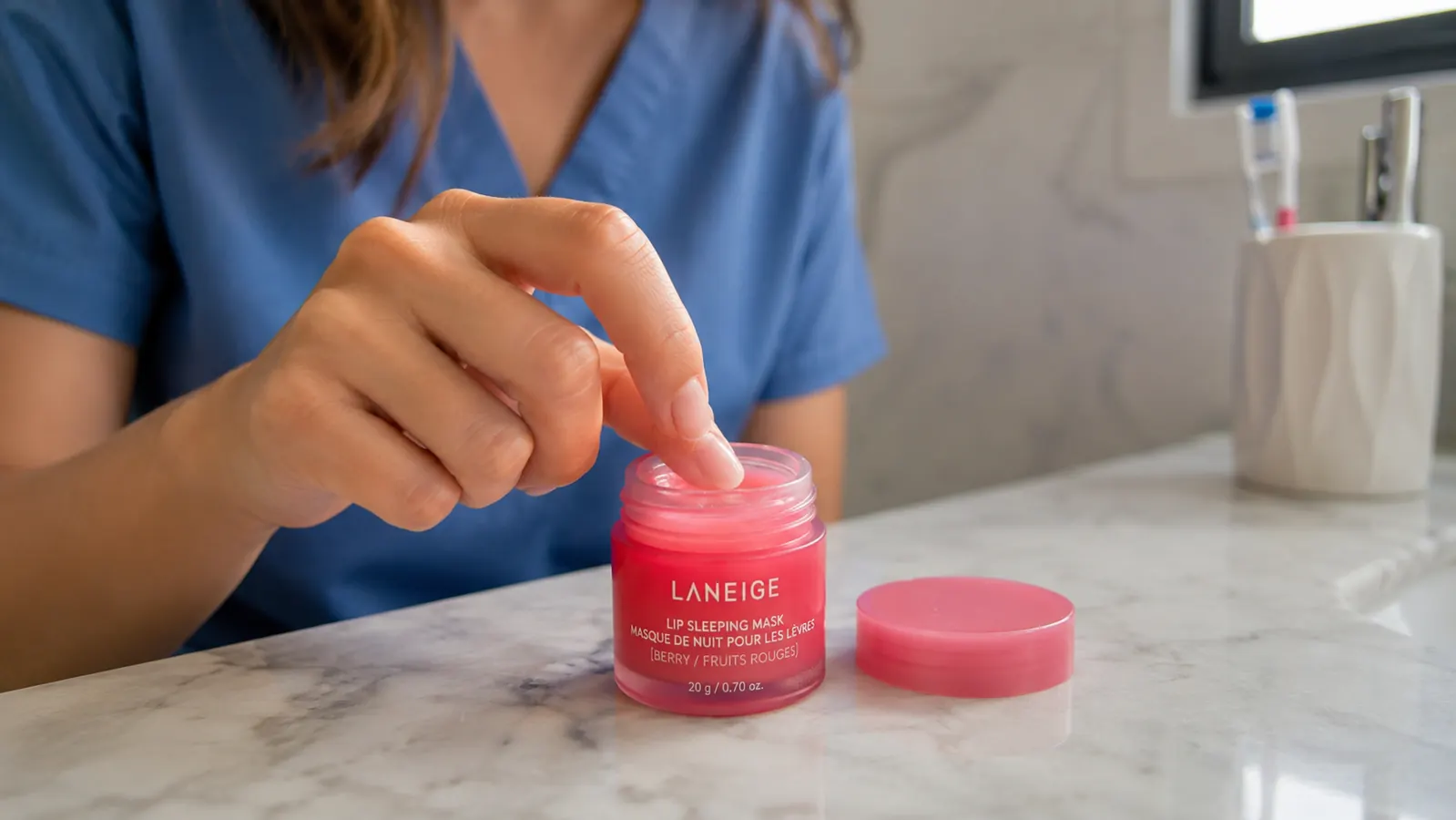
The name had me rolling my eyes a little going in, because in skincare marketing everything gets called a mask now, even things that are functionally just a thicker moisturizer. Once I read the actual ingredient list, the term made more sense than I expected. The formula leans on shea butter and hydrogenated polyisobutene, both occlusive ingredients that form a barrier over the skin rather than soaking in and disappearing the way a lighter product would. That barrier is the entire mechanism, and it only works if you leave it alone for hours, which is exactly what happens while you sleep and exactly what doesn't happen during a ten-hour shift where you're talking, sipping coffee, and adjusting a mask constantly.
There's also a small amount of a vitamin C derivative and a berry extract blended in, and I'll be honest that I can't tell you with confidence how much those two ingredients are doing versus the shea butter carrying the whole formula. My lips did look a little less dull by week four, but I'm not willing to credit a trace ingredient in an overnight balm for that when plenty of other things changed too, including the fact that I was finally moisturizing consistently instead of skipping most nights out of laziness.
What I will say without hedging is that the occlusive barrier idea holds up against my own mask problem specifically. The friction and constant airflow from wearing a mask all shift keeps stripping whatever thin layer of balm I'd applied that morning, and a heavier, longer-sitting formula applied at night gave my lips something to work with before the next shift started chipping away at them again.
The Price Question Nobody Answers Honestly
Here's the part most reviews skip past. This costs noticeably more than a stick of drugstore balm, and the honest question isn't whether it works, it's whether it works enough to justify sitting in a nicer price bracket than a three-pack of chapstick. I don't think there's a universal answer, and anyone who tells you there is has usually only tried one side of the comparison.
For someone whose lips are only dry a few weeks a year, I don't think the jump is worth it. A basic petroleum-based balm used consistently will get most people through mild seasonal chapping just fine, and spending more on a jar isn't going to fix a problem that was never that serious to begin with. I've watched people online treat this like a status symbol lip balm, and that part of the hype I think is genuinely silly.
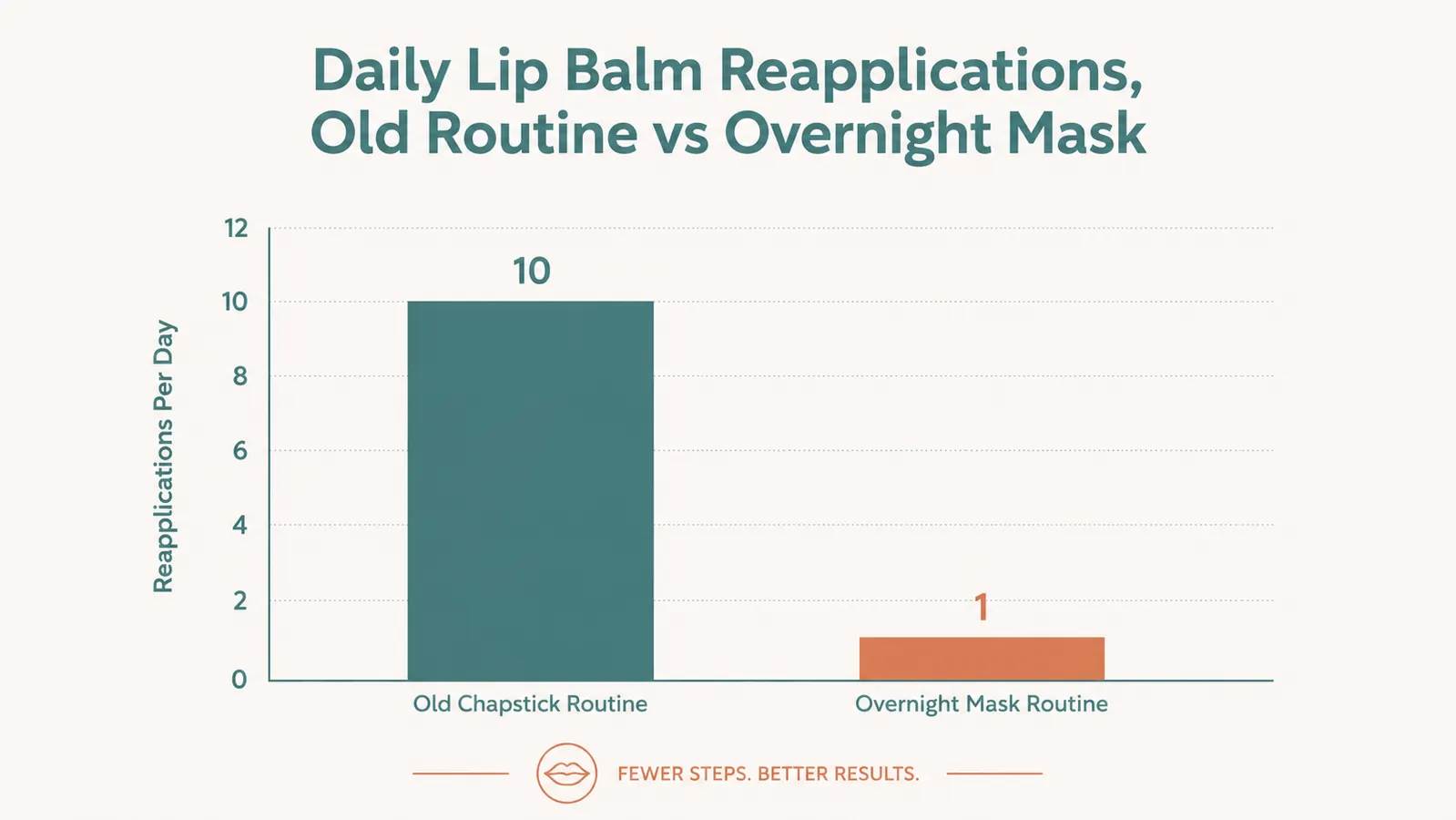
For someone like me, reapplying stick balm every twenty to thirty minutes for months at a time, the math changes. A small dab goes a long way, and one jar lasted me the full six weeks with room to spare, versus the two or three sticks of regular balm I'd have burned through reapplying constantly at that rate. When I stopped counting the price per jar and started counting the price per month of actually staying comfortable, the gap closed a lot more than I expected it to.
I also priced out a few of the other viral lip treatments my sister had recommended before this one, and most of them landed in a similar range once you accounted for how quickly they got used up. If price alone is the reason you're hesitating, it's worth comparing cost per week of actual use rather than the number on the shelf, because a cheaper balm you reapply constantly can end up costing you more over a season than a jar that lasts.
The Jar Problem Nobody Warns You About
I need to talk about the format, because this is the thing that almost made me give up in week one. You dip for it. There's no twist-up stick and nothing you can squeeze one-handed, just an open jar and either your fingertip or the little spatula tucked into the box. For someone who's spent years popping the cap off a chapstick between patients without a second thought, that's a genuine adjustment, and not a small one.
At home before bed this was a nonissue. But I tossed it in my bag for a weekend trip in week three and quickly remembered why stick balms took over the market in the first place. Digging a finger into an open jar in a gas station bathroom or the passenger seat of a car isn't practical, and I ended up leaving it at home most days it wasn't part of my nighttime routine, which limits how useful it actually is outside a bedroom setting.
There's also a hygiene angle worth mentioning honestly. Dipping the same finger in repeatedly, night after night, isn't ideal from a contamination standpoint, even if the risk in practice is probably low for most healthy people. If that bothers you, use the spatula every time instead of your finger, though I'll admit I stopped bothering with it by week two because it felt like an extra step for very little benefit. My jar also picked up a thin dry film across the top surface once I hit week five, which scraped off fine but wasn't something I expected from a product marketed as this premium.
What Actually Changed, and What Stayed Exactly the Same
The corner cracking, which was my worst symptom, noticeably improved by the three-week mark and had mostly resolved by week five. That's the result I'd point to first if someone asked whether this was worth trying. My daytime reapplication dropped from roughly every half hour to twice a shift, usually right after lunch and again toward the end of the day when I was tired of adjusting my mask.
What didn't change: on my longest twelve-hour shifts, my lips still felt dry by hour ten, mask friction being what it is. This isn't a product that erases the underlying cause, it just gives your lips a stronger starting point each morning. I also noticed no real difference in how my lips looked under lipstick during the day, since by then the overnight effect had mostly worn off and I was back to relying on whatever daytime product I had on hand.
The scent surprised me in a way I didn't expect going in. It's a distinct sweet berry smell, stronger than I anticipated from the reviews I'd read beforehand, and while I ended up not minding it, Renata tried a dab of mine one night and said she found it slightly too strong for her taste. If you're sensitive to fragranced lip products, this is not a subtle scent, and I don't think it's fair to call it fragrance-light the way some marketing implies.
What I Liked
- Real, measurable reduction in corner cracking within three to five weeks
- Cuts daytime reapplication down significantly for chronic dryness
- A small amount lasts a long time, which softens the price gap over months
- Comfortable texture that doesn't feel greasy or heavy overnight
Where It Falls Short
- Costs more than drugstore balm and isn't worth it for mild, occasional dryness
- Jar format is inconvenient for travel and impractical mid-shift
- Strong berry scent that some people will find too much
- Doesn't touch the underlying cause of friction-based dryness, like a mask strap
The hype got the results half right and the honesty half wrong. It works, but not for the reason a viral video would have you believe.

Who This Is For
If you're stuck reapplying stick balm every twenty or thirty minutes and it never feels like it's catching up, or you deal with friction-based dryness from a mask, an instrument, or dry indoor air for hours at a stretch, this is genuinely worth the switch. The math starts working in your favor once you're using enough regular balm that a jar lasting six or more weeks starts to look reasonable by comparison, and once you've accepted that a jar means fingertip application, not a twist-up stick.
Who Should Skip It
If your lips only bother you for a couple of weeks a year, save your money and stick with basic petroleum jelly or a drugstore balm, it'll do the job fine. Same goes if you need something you can apply one-handed during the day, since the jar format will frustrate you no matter how good the formula is, or if fragranced lip products bother you, since this one isn't subtle about its scent. And if you're buying it purely because it went viral, I'd wait until the novelty wears off in your own head before spending money on hype alone.
Six weeks in, the hype turned out to be mostly earned.
If mask friction or dry indoor air keeps chapping your lips no matter how often you reapply, Laneige Lip Sleeping Mask is worth judging for yourself over a real few weeks, not just one night. Check today's price on Amazon before you decide.
Amazon Check Today's Price on Amazon →