

I've run a small landscaping and snow-removal crew for eighteen years, which means my hands spend the warm months in mulch, fertilizer, and cold hose water, and the cold months wrapped around a plow handle in temperatures that make skin crack open before you even notice it's happening. For a long stretch of that, I treated cracked knuckles the same way most people do: grab whatever lotion is under the kitchen sink, rub some in, forget about it until it stings again the next morning. It never actually closed anything. It just bought me an hour or two before the same crack on my thumb split right back open, usually right as I was gripping something I couldn't just drop.
What changed things wasn't a fancier lotion. It was switching to a heavy-duty repair cream, specifically O'Keeffe's Working Hands, and using it in a specific order and at specific times instead of just rubbing it in whenever I remembered. Below is the exact five-step routine that finally closed cracks that had been reopening on me for years, plus what I add on the worst weeks and what I do differently now that I've had a full season to figure out what actually matters and what doesn't.
Tired of Cracks That Reopen Every Time You Wash Your Hands?
O'Keeffe's Working Hands is built for skin that's already split, not just dry. A concentrated glycerin and allantoin formula absorbs into damaged skin instead of sitting on top of it the way a regular lotion does.
Amazon Check Today's Price on Amazon →Step 1: Wash With Lukewarm Water and Pat, Don't Rub, Dry
This sounds too basic to matter, but it's the first place most people go wrong without realizing it. Hot water feels good on cold, achy hands after a shift outside, but it strips the natural oils your skin needs to hold onto moisture, and it does it faster than you'd think. I switched to lukewarm water for hand washing years before I even started using a repair cream, and it alone cut down how tight and dry my hands felt by the end of the day.
How you dry matters just as much. Rubbing a rough shop towel over already-cracked knuckles reopens splits that are trying to close, even ones that don't look bad enough to notice at first. I pat dry now, gently, especially around the knuckles and any spot where the skin has split before. It takes maybe three extra seconds, and it's the difference between skin that gets a chance to heal and skin that gets re-irritated forty times a day.
Step 2: Apply the Cream Immediately, While Skin Is Still Slightly Damp
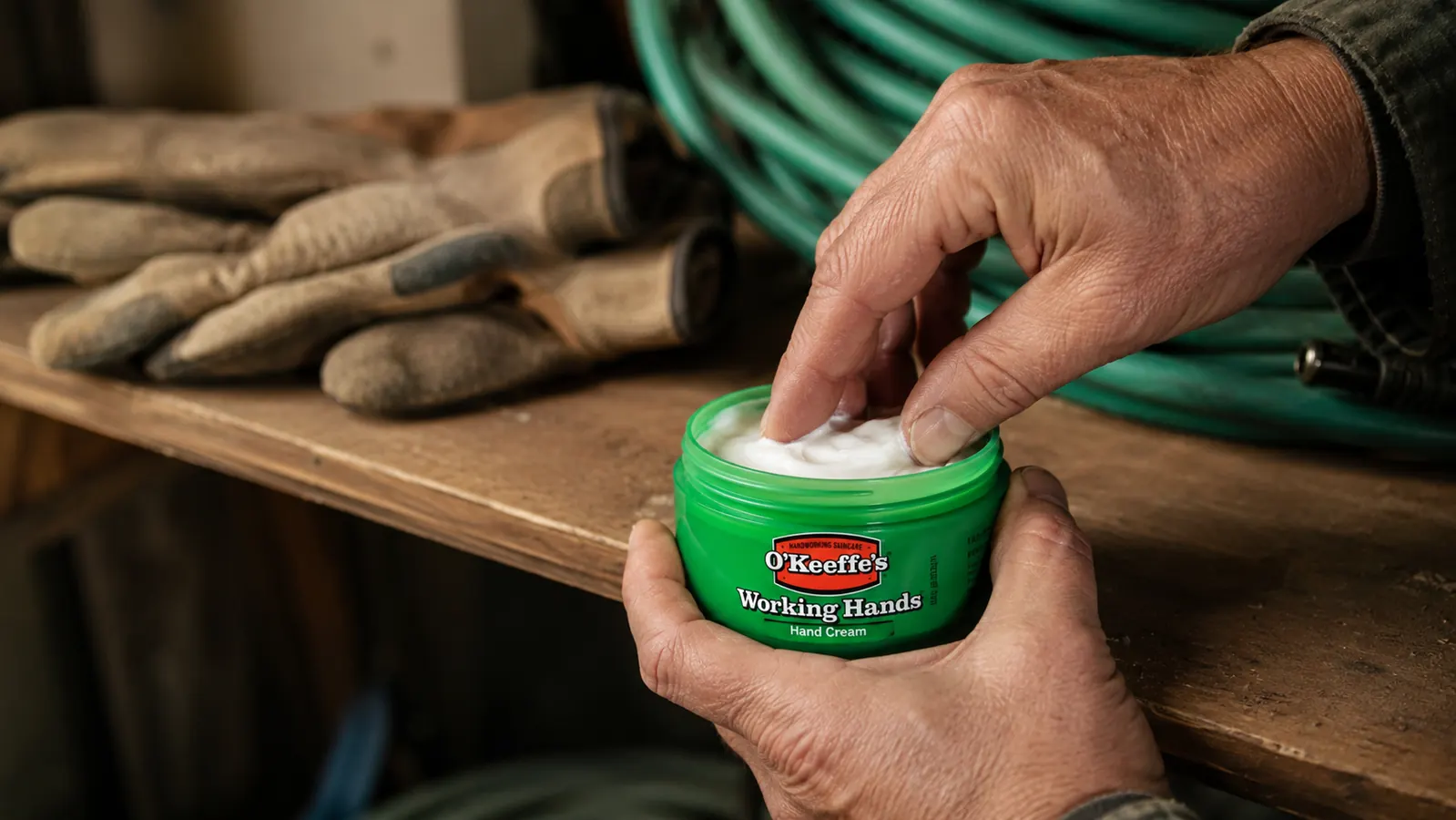
This is the step that made the biggest difference for me. Right after washing, while my hands are dry to the touch but the skin still has a little residual moisture in it, I work in a dime-to-nickel-sized amount of O'Keeffe's Working Hands, concentrating on the knuckles, around the nail beds, and any spot that's currently split or has a history of splitting. Applying within that first minute after washing traps more moisture against the skin than applying to hands that have already sat around drying out in the air for twenty minutes.
I take my time working it into the actual cracks, not just smoothing it across the surface. Cracked skin needs the cream to get down into the split, not just coat the skin around it, and that means pressing gently into the crack itself for a few seconds rather than swiping across it the way you would with a normal lotion. It takes thirty to forty seconds to fully absorb, longer than a typical lotion, and that's normal for a cream this concentrated. Don't wipe it off early just because it feels like it's taking a while.
Part of why this works better than a regular hand lotion comes down to what's actually in it. The formula is built around a concentrated glycerin base with allantoin, an ingredient that shows up in a lot of wound-care products because it softens and helps repair damaged tissue rather than just sitting on top of it and blocking air and water. Glycerin pulls moisture into the skin instead of coating over it the way petroleum jelly does, which matters a lot more once a knuckle is actually split open and not just dry.
I keep the jar somewhere I'll actually see it, on a shelf by the mudroom sink, not buried in a truck console or a drawer I forget exists. The number one reason people don't stick with a routine like this isn't that the product doesn't work, it's that the jar is somewhere inconvenient and they skip it on the busy days that matter most.
Step 3: Protect Your Hands From the Thing That Caused the Cracking
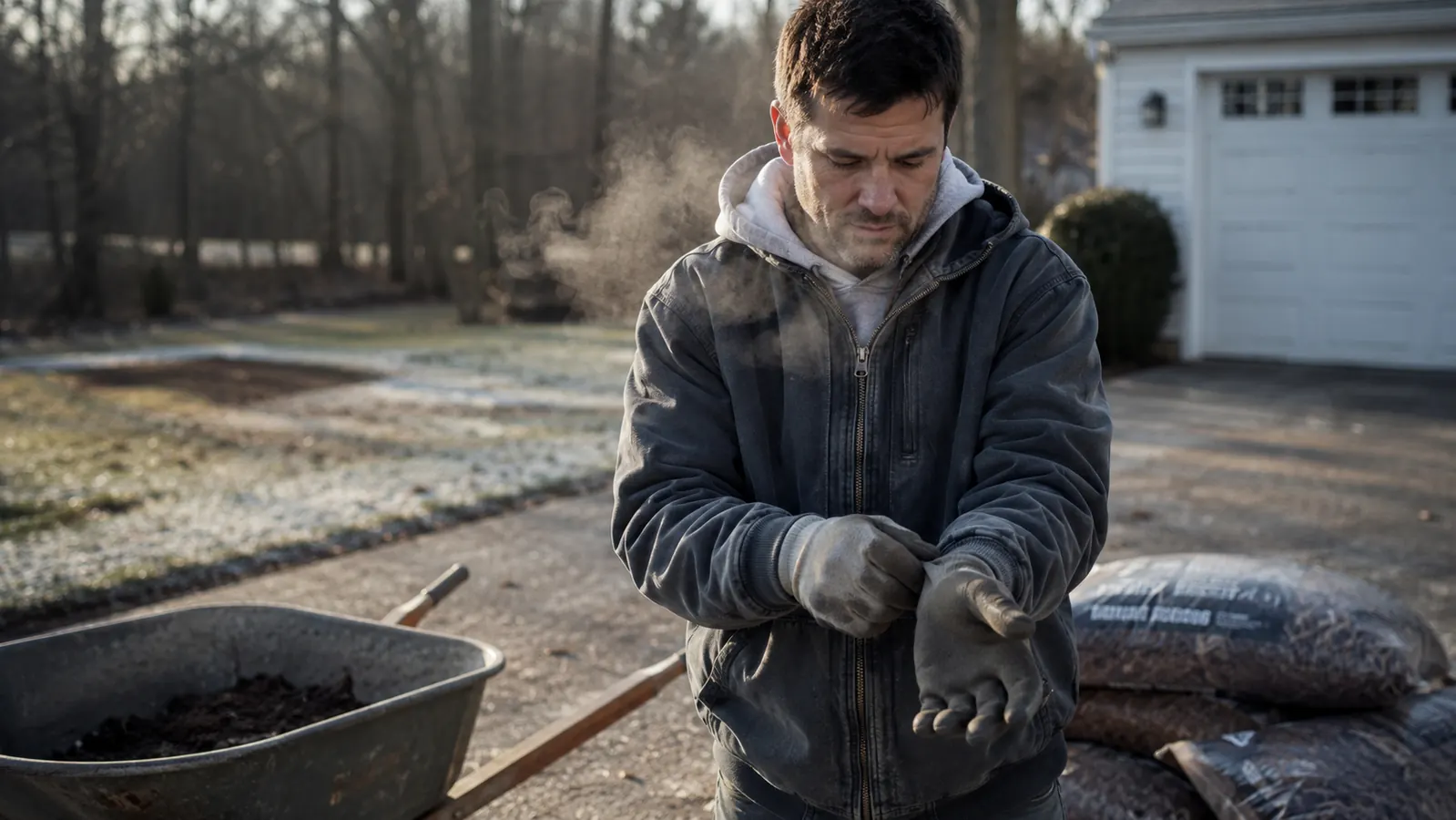
Healing between washes only matters if you're not immediately undoing it with the next round of yard chemicals, cold hose water, or de-icing salt. For me that meant actually wearing gloves for the tasks I used to just push through bare-handed because gloves felt slower. Fertilizer spreading, anything with the hose in cold weather, and de-icer application all go through gloves now, no exceptions, even on the mornings I'm in a hurry to get to the next job.
If your cracking comes from constant hand washing instead of outdoor work, the same idea applies to dish soap and cleaning chemicals. A thin pair of cotton gloves under rubber ones keeps the cream you just applied from getting immediately stripped back out by the next round of suds. It feels like an extra step until it becomes routine, and then it's just what you do.
Cold, dry wind is its own culprit that's easy to overlook. If you're outside for long stretches in winter, exposed skin loses moisture to the air even without touching anything abrasive. I started keeping a spare pair of gloves in the truck specifically for the walk from the truck to a job site, since that short exposed stretch in a cold wind was doing more damage than I gave it credit for.
Step 4: Do a Heavier Overnight Treatment on the Worst Cracks
Most days, the wash-and-apply routine is enough on its own. But on the knuckles that are genuinely split open, not just dry, I do a heavier overnight version. Right before bed I apply a thicker layer than usual, more than feels reasonable at first, and pull on a pair of thin cotton gloves to sleep in. The gloves keep the cream from rubbing off on the sheets and hold it against the skin for the full night instead of it getting absorbed or wiped away within an hour.
This isn't something I do every night, it's a rough-crack step for the knuckles that are actually open and slow to close. Once a crack has visibly started to close over, I drop back to the regular twice-daily routine for that spot instead of continuing the overnight treatment indefinitely. There's no real benefit to babying skin that's already healed, and it just means I run through the jar faster than I need to.
A pair of cheap cotton gloves from the hardware store works fine here. You don't need anything specialized, just something breathable that keeps the cream in place without trapping heat and making your hands sweaty overnight, which can actually irritate already-cracked skin instead of helping it.
Step 5: Track the Healing Over One to Two Weeks
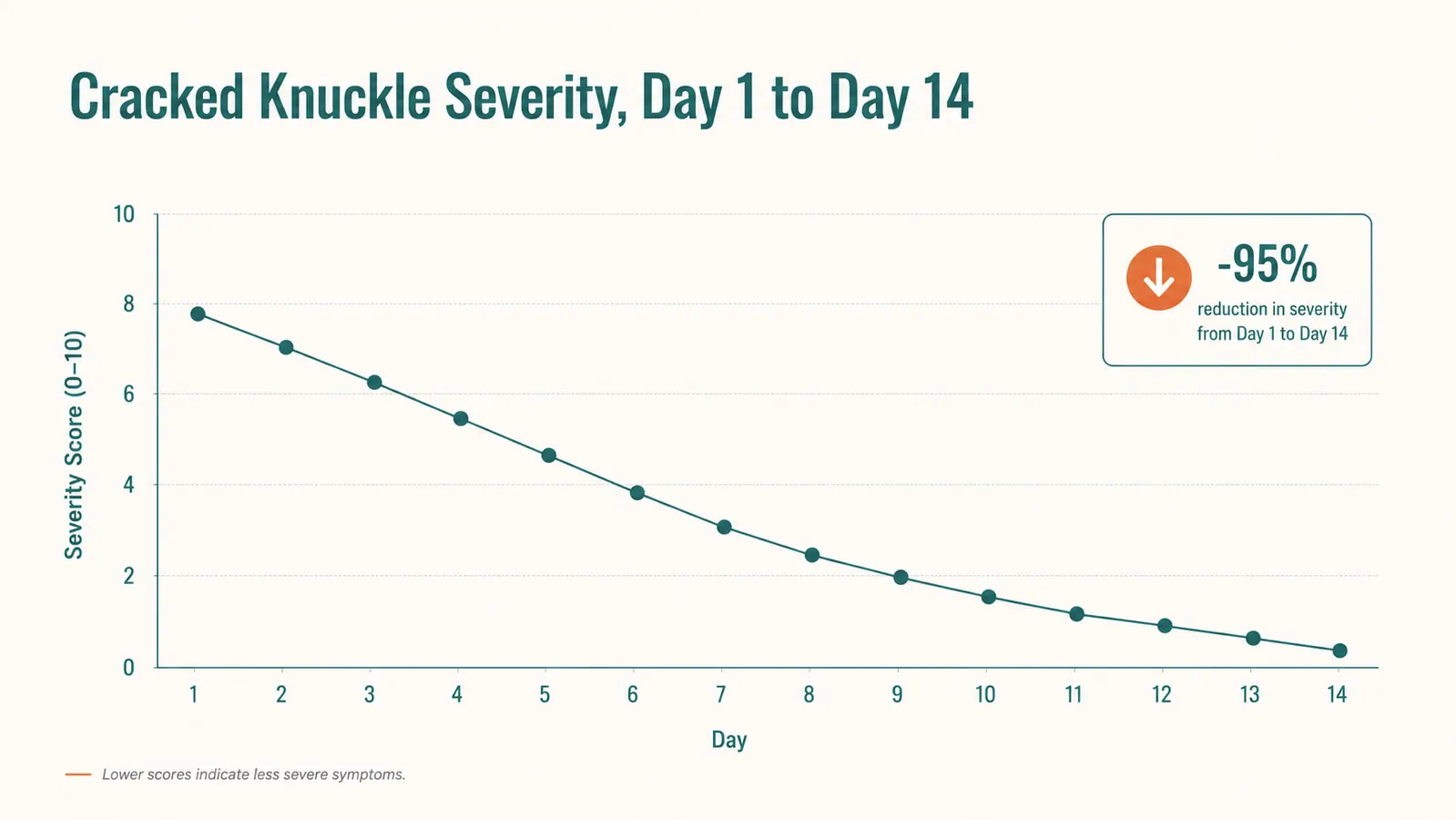
Cracked skin doesn't close in a day, even with a heavier cream working in your favor. The first two or three days, what I noticed was less stinging when I gripped a shovel handle or ran hot water over my hands by accident, not full healing yet. By day five or six, the deepest cracks on my thumbs and index knuckles had visibly started to pull closed at the edges instead of gaping open. By the end of two full weeks of the twice-daily routine plus the overnight step on the worst spots, the skin had closed and stayed closed through a full week of regular outdoor work.
I kept a rough note on my phone rating each hand on a one-to-five scale every morning, similar to how I'd log equipment issues on a job site. It's a small habit, but it kept me consistent through the first few days when it didn't feel like anything was changing yet, right before it actually started working. Twice-daily use every single day beats a heavier application every few days whenever you happen to remember, and the difference in how fast things close up is bigger than I expected.
If you're two full weeks into consistent use with genuinely no improvement, or if a crack is deep enough that it's bleeding, doesn't stop stinging, or shows signs of infection like redness spreading or warmth around the site, that's past what any hand cream should be handling on its own. See a doctor at that point. Persistent cracking that won't close even with a heavy-duty repair cream can sometimes point to something like a fungal infection, a nutrient deficiency, or a skin condition that needs a targeted treatment, and no cream fixes that root cause on its own, no matter how good it is.
What Else Helps
A few things outside the core routine made a real difference for me. Switching to a milder hand soap at the shop sink cut down on how often the cracking started in the first place, the harsh grease-cutting soap I used to grab out of habit was drying my hands out faster than the work itself. A humidifier in the bedroom during winter months helped too, especially once the heat kicks on and the indoor air gets as dry as the air outside.
Staying ahead of water intake through the day matters more than people expect. By the time your hands feel tight and papery, your skin is usually already behind on hydration and playing catch-up, the same way it works with chapped lips. A basic multivitamin didn't hurt either, and a routine bloodwork panel one winter showed I was running a little low on a couple of the vitamins tied to skin repair, which a doctor mentioned is a pattern worth watching if cracking keeps showing up season after season. I'm not saying supplements fixed it on their own, the twice-daily cream did the actual healing, but staying on top of the basics seemed to make the cracking show up less often to begin with.
And if you're prone to cracking every single winter the way I was for years, starting the routine before the cracking actually shows up is a lot easier than trying to close cracks that are already open. I start applying twice a day as soon as the first cold snap hits now, instead of waiting until my knuckles are already split and I'm playing catch-up for weeks.
A thin lotion you rub on and forget can't out-heal skin that's actually split open. You need something built to close a crack, not just soften the skin around it.
Ready to Actually Close Those Cracks Instead of Just Greasing Them Up?
If your hands split at the knuckles every time the weather turns or the work gets rough, O'Keeffe's Working Hands is built for exactly that. Give this five-step routine a real two weeks and see how your hands respond.
Amazon Check Today's Price on Amazon →